
Meet Amy Bosko, LCSW
I’m a Chicago-based therapist offering online therapy throughout Illinois. My therapy shaped by professional training, lived experience, and an understanding that real life rarely fits neatly into a diagnosis. I work especially with disabled and neurodivergent people, parents and caregivers, and people navigating anxiety, relationships, or complex family experiences.
I’m blind and I grew up in foster care. Both experiences shaped the questions I ask and what I notice when someone talks about family, independence, belonging, or dealing with a system that doesn’t seem built for them.
In sessions, I’m conversational, supportive, and direct. I won’t assume that my life is the same as yours. I want to understand what’s happening in your life and help you find a way forward that makes sense there.
THERAPY THAT MAKES ROOM FOR THE WHOLE PERSON
You shouldn't have to explain your entire life before therapy can actually begin.
Therapy is more useful when your therapist understands that mental health doesn't happen in isolation. Disability, family relationships, caregiving, childhood experiences, identity, access, stress, and the systems you have to navigate can all shape what life feels like day to day.
At Strong Mind Studio, I provide warm, relational online therapy throughout Illinois for people navigating anxiety, emotional overwhelm, disability, caregiving, parenting, family conflict, life transitions, and experiences that don't always fit neatly into one category.
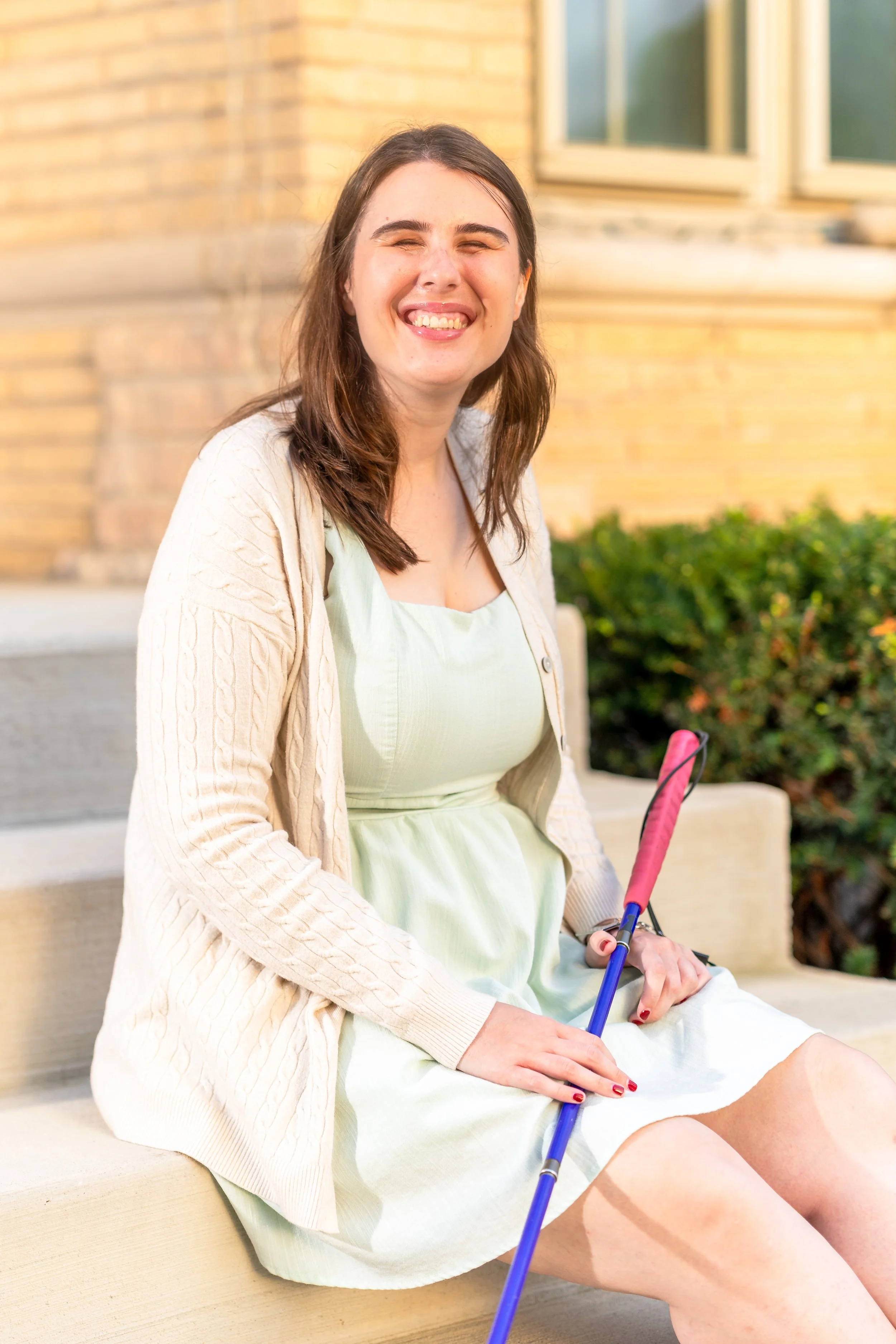
MEET AMY
Being blind has shaped the therapist am.
Being blind has shaped a lot of who I am and the kind of therapist I always strive to be. I’ve been totally blind since birth, so I know firsthand what it’s like to navigate a world that isn’t always designed with disability in mind.
I also know what it’s like to go to therapy and end up spending part of the session explaining your disability to your therapist.
I’ve had therapists ask me things like how I use VoiceOver, whether I want a guide dog, or why I don’t just go to a blindness organization for support. They were usually trying to be helpful, but sometimes I just wanted to talk about what was actually going on in my life without having to stop and explain blindness first.
01. DISABILITY-AFFIRMING CARE
Your disability can be part of therapy without becoming the whole story.
That experience is a big part of why working with people with disabilities is so important to me. I work with people with physical, intellectual, developmental, and chronic disabilities, as well as people who are neurodivergent.
Disability can absolutely be something we talk about in therapy, especially when it comes to confidence, relationships, independence, self-advocacy, or dealing with other people’s assumptions. But it also doesn’t have to be the focus.
Sometimes you’re a disabled person who is stressed about work, going through a breakup, struggling with family, or just having a really hard week.
02. SUPPORT FOR FAMILIES + CAREGIVERS
Caring about someone doesn't make the hard parts less complicated.
I also work with parents, family members, and caregivers of people with disabilities.
Caring for and advocating for someone you love can come with a lot of emotions that people don’t always feel comfortable saying out loud. You can love someone deeply and still feel exhausted, frustrated, worried, overwhelmed, or unsure of what to do next.
Therapy can be a place to talk honestly about all of it without being judged for having complicated feelings.
Outside of disability, I have lived experience with foster care, divorce, and complicated family dynamics. Those experiences have made me especially passionate about belonging, family preservation, and helping people navigate relationships that might not fit neatly into a box.
03. WHAT THERAPY WITH ME IS LIKE
Warm, conversational, supportive- and pretty direct.
As a therapist, I’m warm, conversational, and pretty direct. I’m going to listen and support you, but I’m also going to be honest with you and gently challenge you when I think it could help.
You don’t need to know exactly what you want to say before you come to therapy, and you definitely don’t need to have everything figured out.
You can just show up as you are.
04. MY APPROACH TO THERAPY
Therapy that adapts to you.
The way I practice therapy is grounded in both professional training and real life.
I draw from approaches including cognitive behavioral therapy (CBT), play therapy, relational therapy, strengths-based, and person-centered work, while adapting therapy to the age, needs, communication style, and experiences of the person in front of me.
With children and teens, therapy may look different than it does with adults. With families, we’re often paying attention to patterns between people rather than focusing on one person as the problem. And when disability is part of your life, accessibility and accommodations aren’t side notes- they’re part of providing thoughtful care.
More than anything, I focus on what actually feels helpful for you.
Together, we’re figuring out how to make your day-to-day life feel a little more manageable, a little more clear, and a little more like you.
ONLINE THERAPY IN ILLINOIS
Care that is accessible and supportive.
Strong Mind Studio provides online therapy for children, teens, adults, parents, caregivers, and families throughout Illinois, including Chicago and surrounding communities. Virtual sessions make it possible to access therapy from home or another private space without adding travel to an already-full schedule.
I am currently in network with Blue Cross Blue Shield PPO, Aetna, Cigna PPO, UnitedHealthcare/Optum, Medicare, and Medicaid, with self-pay sessions offered at $150 and sliding-scale options starting at $50 per session.
If you're unsure whether I’m the right therapist for you or your family, you're welcome to start with a consultation. You don't need to know exactly what kind of therapy you need before reaching out.